Featured products

coN2r bulletproof vest has been designed...
More details »
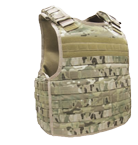
The MOLLE vest provides the user....
More details »
Frequently Asked Questions
In this section we will deal with the most common questions that arise when you are about to purchase bulletproof vest. Choosing the right body armor is essential. Here are the answers you will be looking for.
What ballistic protection level should I get? Does the body armor keep me completely injury-free? What is the warranty for ballistics performance of VALKRE Armor Systems' ballistic protection products? Cheap bulletproof vests? At what distance does the bulletproof vest protect? How to determine body armor size I need?
What ballistic protection level should I get? NIJ level IIIA body armor is worn by most law enforcement and security officers. This is the most acceptable bulletproof vest in the industry with regards to safety, cost and its ability to be worn concealed. NIJ level III and IV bulletproof vests require ballistic inserts and are thus heavier and more expensive. The plates will give you exceptional level of protection, furthermore, it gives you opportunity to return fire if fired upon. These vests are highly desirable under machine gun threats and high velocity rounds and thus are ideal for military use. For more information on protection levels please refer to NIJ standard chart below. Top
Does the body armor keep me completely injury-free? Very common question for someone thinking of getting a body armor. Bulletproof vests are designed for stopping projectiles defined for each protection level and, while doing so, to meet certain requirements. Armor must not be pierced under any circumstance, and trauma to clay surface upon which tested sample has been attached has to stay below 44 mm (1.75"). Research conducted by US National Institute of Justice has shown that every trauma to the body bigger than 65 mm (2.5"), in the protected area, can cause damage to all the vital organs are located in it. So, it has been decided and defined as standard that maximum trauma allowed is 30% less than the potentially dangerous value. Experiences have shown that projectile stopped by body armor which complies to NIJ standard does leave some trauma to the body, but all the vital organs are left intact. Top
What is the warranty for ballistics performance of VALKRE Armor Systems' ballistic protection products Body armor warranty depends on durability of the ballistic material used in it. The materials used for construction of our body armor and bulletproof vests line are the world's most advanced bulletproof fabrics. This allows us to give 10-year warranty on performance for any of our products. Top
Cheap bulletproof vests? As bulletproof vests have certain warranty period it is very common that they reenter the market once they have been replaced in regular equipment renewal in military or law enforcement task forces. There can be no guarantees that these vests will serve its purpose of ballistics protection. Scenario is as follows: outdated vests are bought at auction, necessary cosmetic repairs are done (repairing ballistics carrier, some layers of ballistic materials are replaced etc.), repaired vest is reintroduced in the market. We advise to purchase a brand new vest directly from manufacturer, but if decided to purchase used bulletproof vest make sure to check the warranty label and the type of material it is made of. Top
At what distance does the bulletproof vest protect? NIJ standard requires test projectiles fired from 5 m (16.4 ft.) distance for levels of protection up to IIIA, and from 15 m (49.2 ft.) for higher levels. If the bulletproof vest has to perform up to NIJ standard requirements to get approved. Our tests and customers' experience have shown that VALKRE Armor Systems' body armor and bulletproof vests can withstand projectiles fired at point-blank. Top
How to determine body armor size I need? Bulletproof vest and body armor have to fit and follow body contours perfectly for optimal protection. If you have the opportunity to try it on there are few simple guidelines for choosing the right size. When standing, the lowest point on the front of the vest should be leveled with the belt, and in the back 5 cm (2") above the belt. When sitting it must not reach your chin and neck. Top